Jinkō training
Workshop series
Each workshop lasts two hours, with 30 to 45 minutes of instruction and demonstration followed by hands-on practice. Workshops can be taken independently unless a prerequisite is listed.
Participants receive workshop assets, datasets, and access to a Jinkō training environment. The program can be adapted to your team's models, data, roles, and operating environment.
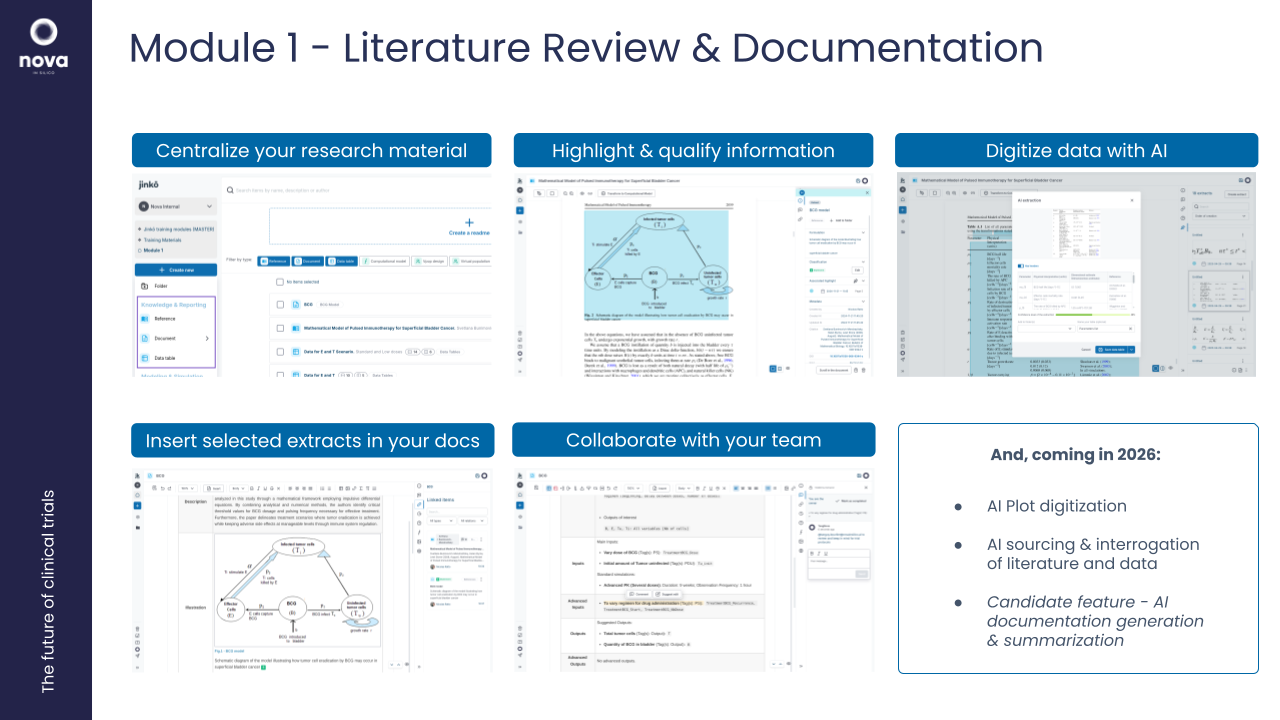
1. Literature review and AI-assisted knowledge extraction
Objective: Extract, organize, and use evidence from scientific literature with Jinkō and Kōhai.
Topics:
- Organizing references and scientific data in a project.
- Extracting equations, parameters, and tables from references.
- Connecting extracted evidence to models and documentation.
- Applying review checks to AI-assisted extraction.
Practice: Participants extract evidence from a defined set of publications and organize it for use in a modeling project.
2. Model import, editing, and creation
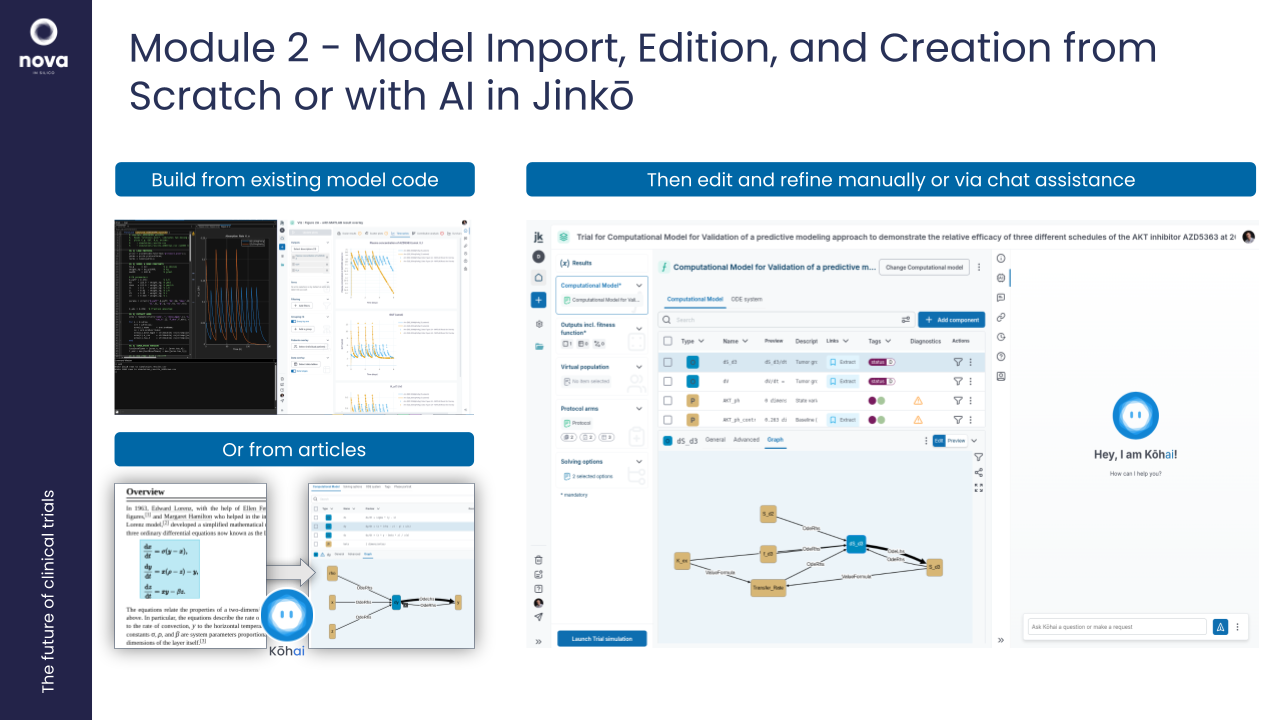
Objective: Import, inspect, edit, and create Computational Models in Jinkō.
Topics:
- Importing SBML and supported pharmacometrics formats.
- Building and documenting a model from scratch.
- Inspecting model structure, units, parameters, and annotations.
- Using Kōhai to prepare a first model version from a paper.
Practice: Participants import and edit a pharmacokinetic model, then review its structure and documentation.
3. Data import and model calibration
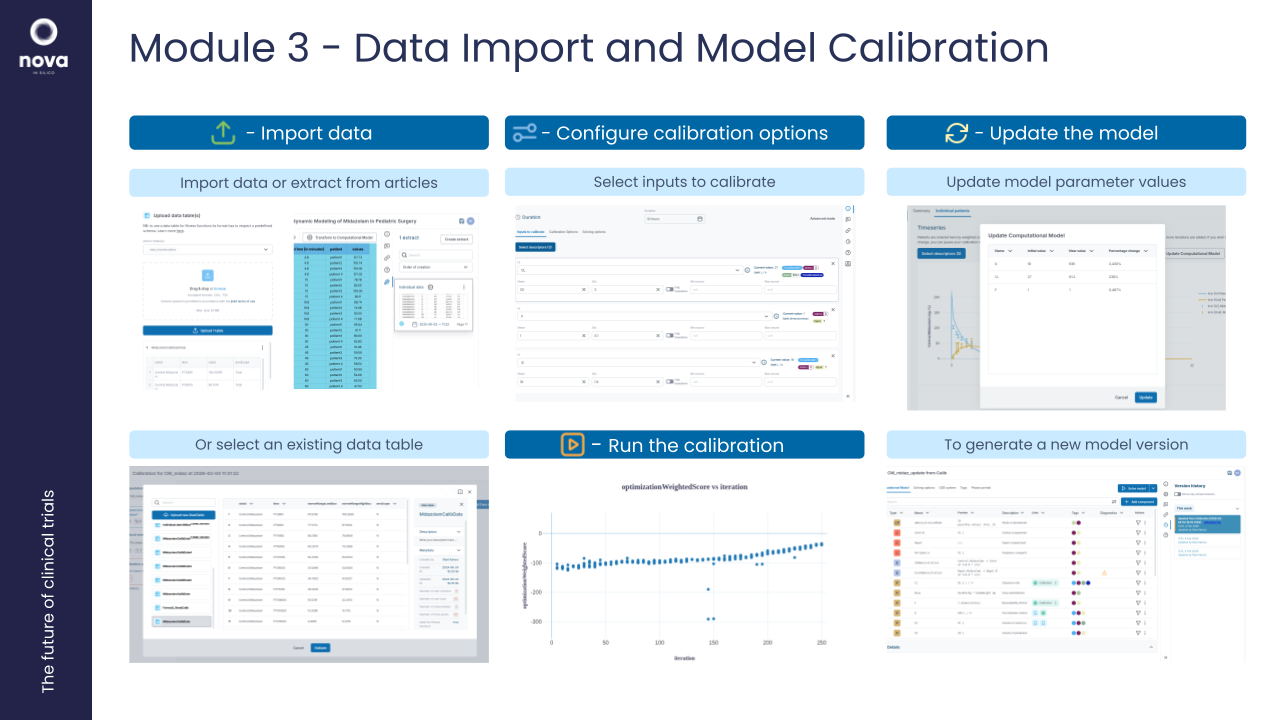
Objective: Prepare data and calibrate a model against quantitative evidence.
Topics:
- Importing structured clinical or laboratory data.
- Translating quantitative and qualitative evidence into scoring functions.
- Configuring calibration parameters and optimization settings.
- Reviewing fit, uncertainty, and model behavior.
Practice: Participants import a dataset, calibrate a model, create a Virtual Population, and inspect the result.
Recommended prerequisites: Workshops 1 and 2.
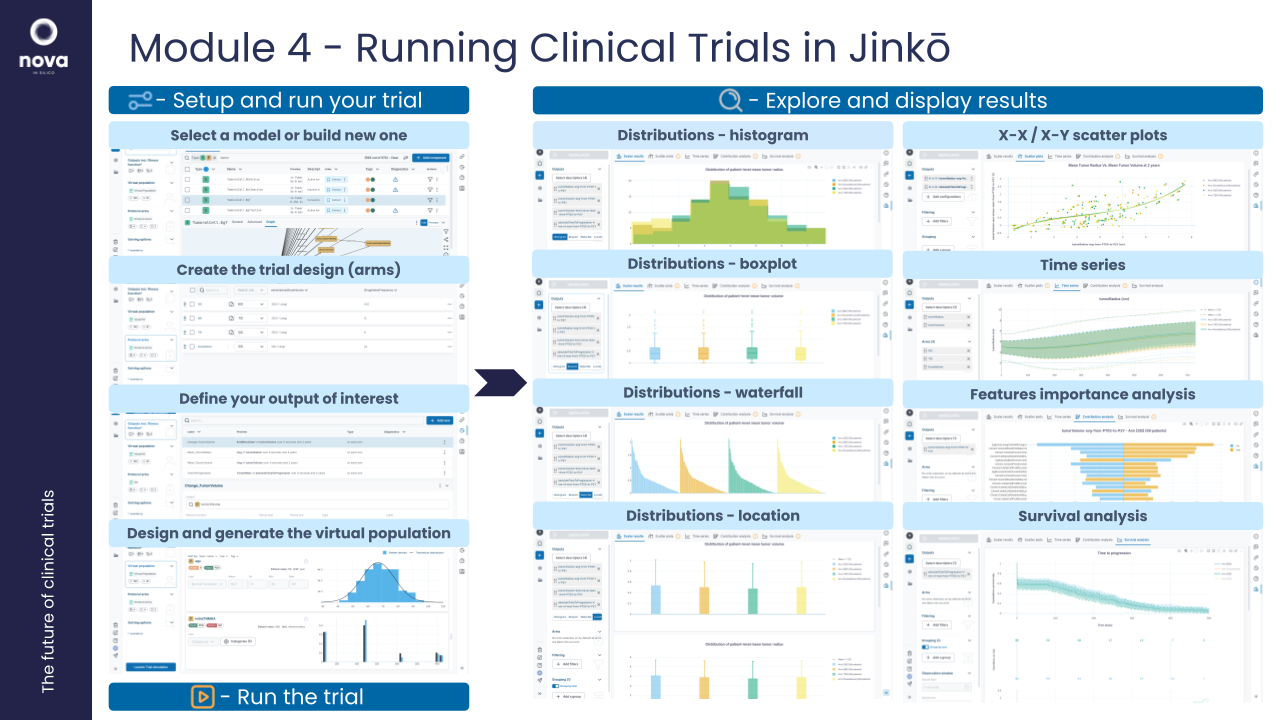
4. Running trial simulations
Objective: Configure, run, and analyze a Trial in Jinkō.
Topics:
- Defining Protocol Arms, doses, measures, and a Virtual Population.
- Running distributed simulations and monitoring progress.
- Comparing scenarios and interpreting outcome distributions.
- Visualizing survival, response, and dose-response results.
Practice: Participants simulate a simplified phase 3 trial and compare its treatment arms.
Recommended prerequisite: Workshop 2.
5. Collaboration and onboarding
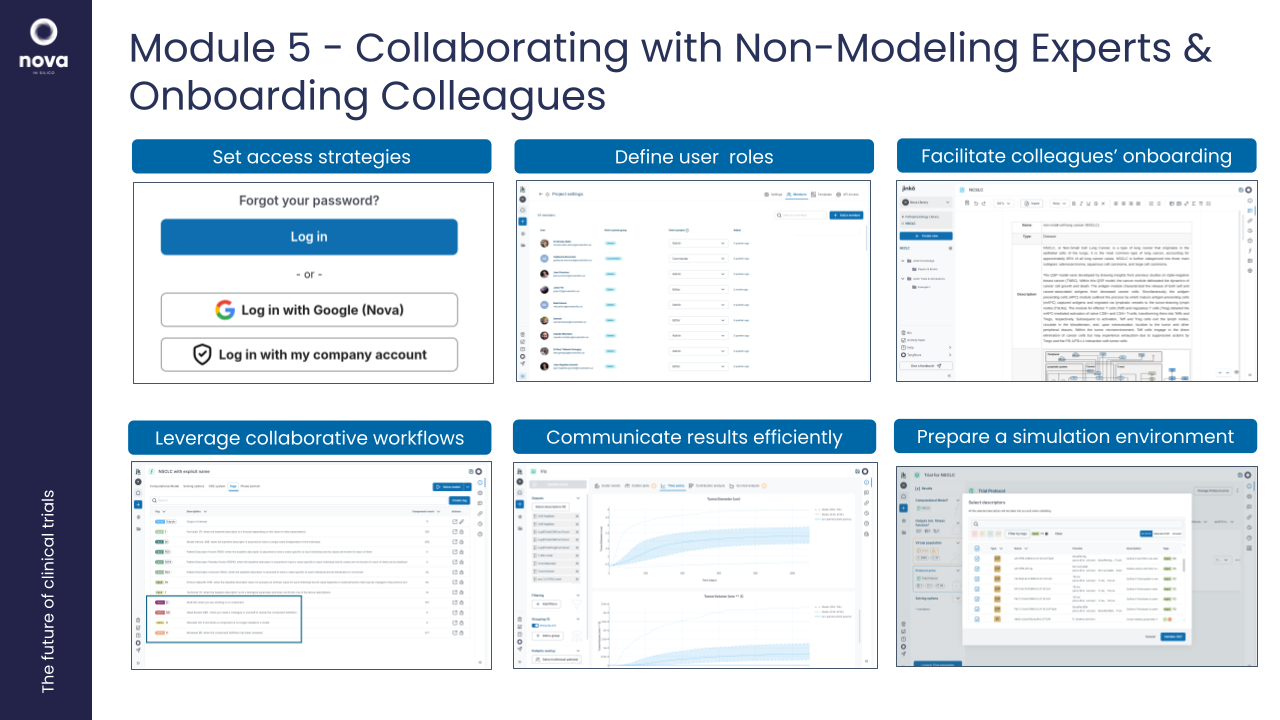
Objective: Prepare traceable work that modeling and non-modeling specialists can review together.
Topics:
- Documenting model scope, assumptions, and limitations.
- Using project roles, comments, links, and version history.
- Preparing simulations and analyses for review.
- Communicating results to scientific and operational stakeholders.
Practice: Participants create a shared project, assign roles, and review a Trial as a team.
Recommended prerequisite: Workshop 4.
6. SDK and skills for programmatic access
Objective: Operate Jinkō through the SDK, skills, and REST API.
Topics:
- Configuring
jinko-sdk, an API key, and a project ID. - Installing and using Jinkō Skills from an external agent harness.
- Managing models, Virtual Populations, Protocols, and Trials programmatically.
- Defining checks and handoff points for agent-assisted scientific work.
Practice: Participants create a Virtual Population and Trial, run a distributed simulation, and review the resulting project items in Jinkō.
Recommended prerequisite: Workshop 4.