Atherosclerosis cardiovascular disease model
Model description: ASCVD
Nova’s ASCVD model combines lipid-lowering therapies biological effects with atherosclerotic plaque progression and resulting major adverse cardiovascular events. It describes the key pathways of lipid homeostasis as well as plaque growth in relation with inflammation and its rupture.
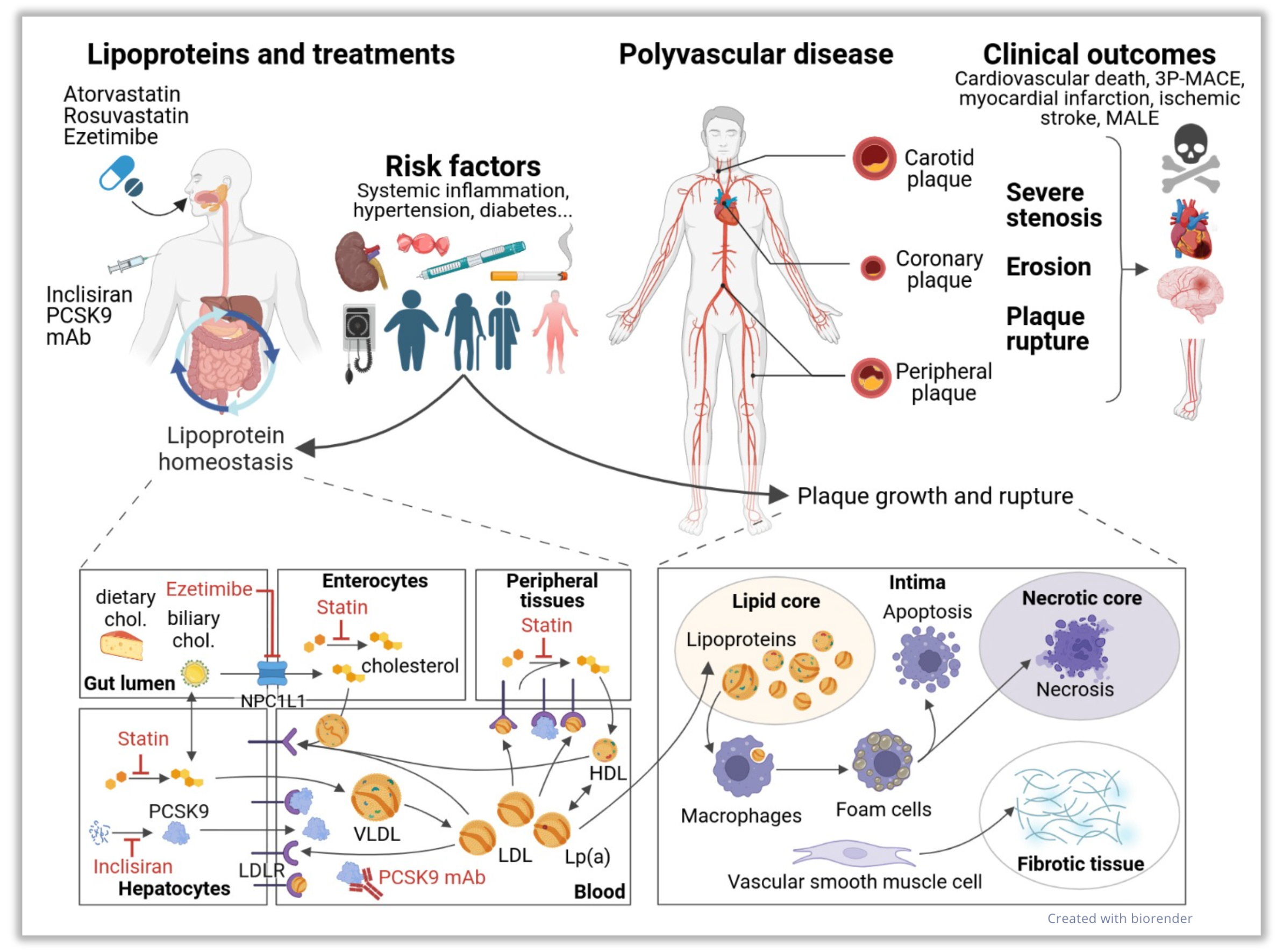
Structure of the ASCVD model. Multi-scale in silico model combining lipoprotein and cholesterol homeostasis; efficacy of lipid lowering treatments among atorvastatin, rosuvastatin, ezetimibe, PCSK9 mAb, and inclisiran; atherosclerotic plaque growth and rupture leading to clinical outcomes and impact of risk factors (not exhaustively listed) on the ASCVD patho-physiology. Abbreviations are as follows: PCSK9 mAb: PCSK9 monoclonal antibody, ASCVD: atherosclerotic cardiovascular disease, CV: cardiovascular, eGFR: estimated glomerular filtration rate, HDL: High density lipoproteins, hsCRP: high sensitivity C-reactive protein, LDL: low density lipoprotein, LDLR: LDL receptor, Lp(a): lipoprotein(a), LLT: lipid-lowering therapies, PAD: peripheral arterial disease, PCSK9: proprotein convertase subtilisin/kexin type 9, NPC1L1: Niemann–Pick C1-like 1, 3P-MACE: 3 point major adverse cardiovascular events, MALE: Major adverse limb events, RCT: reverse cholesterol transport, VLDL: very low density lipoprotein, VSMC: vascular smooth muscle cells.
💊 Drugs that can be tested
Lipid-lowering therapies, e.g.
- Statins (atorvastatin and rosuvastatin)
- Ezetimibe
- Anti PCSK-9 Evolocumab and Inclisiran
👥 Model populations of interest
- Secondary ASCVD patients characterized by their baseline lipid profile and risk factors.
📍Possible clinical endpoints
- Lipids, lipoproteins and hs-CRP dynamics
- Myocardial Infarction
- Ischemic stroke
- Major adverse limb event
- Cardiovascular death
- 3-component MACE
Biological submodels
- Lipid homeostasis
- Treatment pharmacokinetics
- Polyvascular atherosclerosis
Early insights to optimize your trial design: ASCVD model
Long term prediction
Leverage biological data for long-term clinical progression prediction.
New treatment combination
Exploration of innovative treatment for atherosclerosis impacting cholesterol regulation or plaque growth.
Additional comparator arm
Prediction of lipid-lowering treatment combination efficacy on lipoprotein levels and CV outcome occurence.