Release notes: May 2026
Below are summarized product changes released during May 2026.
Highlights by theme
Kohai
- Project attachments now appear in the discussion feed when they are added, and they are also available in a searchable panel.
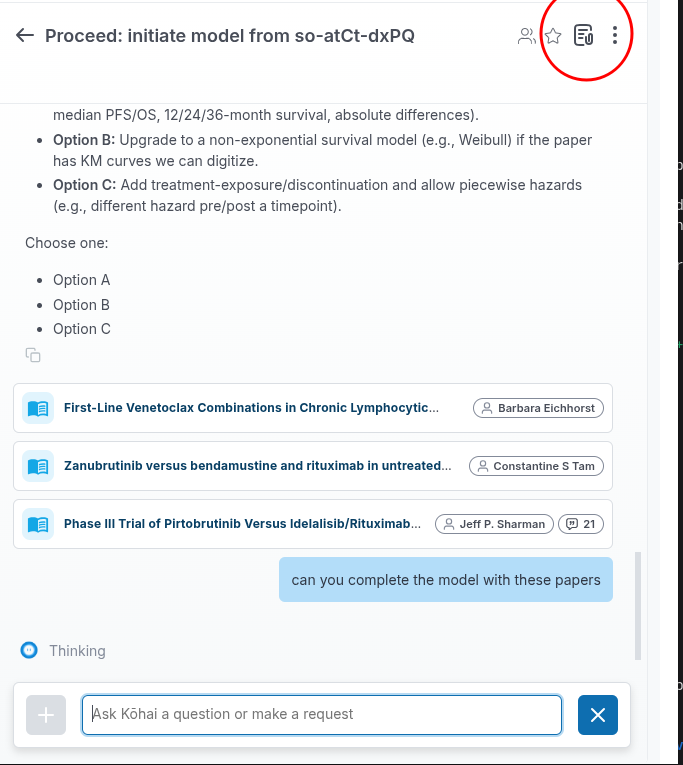
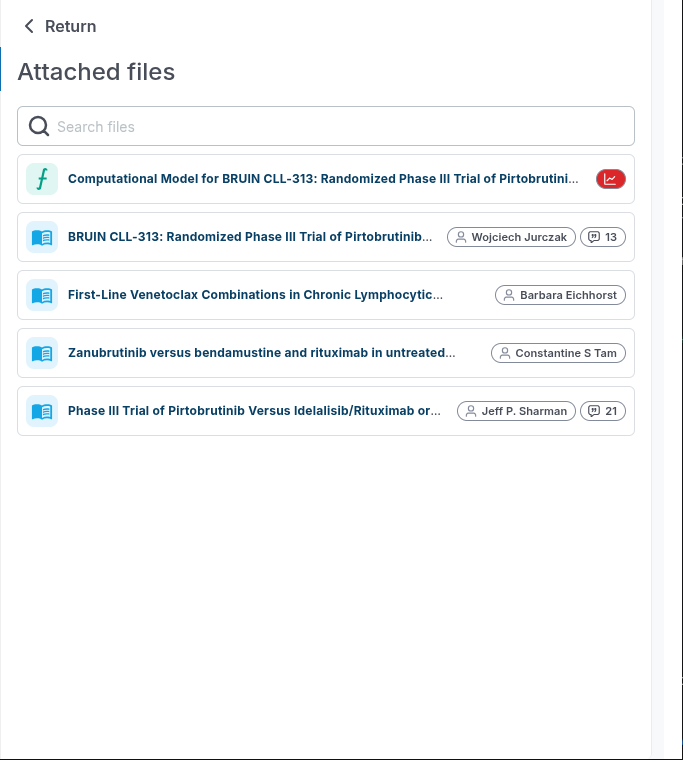
- Kohai can now search PubMed for papers and add them to your project as References, including PDFs when available. The list also shows citation counts to help you quickly identify the most referenced papers.
- The
armControlfield is now handled correctly when Kohai updates a protocol.
Computational Model
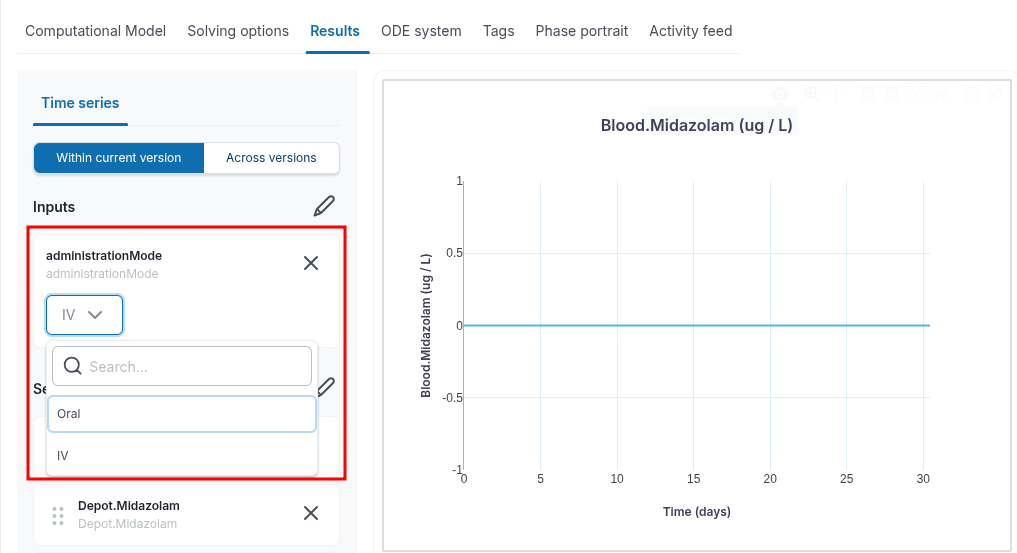
- Categorical parameters in the simple solve panel now use a drop-down list instead of a free-text field, which makes overrides easier and less error-prone.
-
Solver handling for infinite values in root conditions is more robust, which should allow more models to run successfully.
-
You can now export a model to a standalone R script for use with nlmixr and RxSolve.
-
The export supports most model equations, but not events or DDE/DAE models.
-
Discontinuities are now handled more smoothly when
AddAuxiliaryEventsis set todiscontinuityEvents. -
More models can now be solved, and many models run faster.
-
Some models that previously worked with
discontinuityEvents=WarnOnlymay now fail. Users should migrate toAddAuxiliaryEvents. -
Discontinuities in delayed differential equations, such as those using the
delayfunction, are now handled more robustly. -
The maximum number of time points in simple solve has been increased from 100 to 1000.
-
Julia exports now support time-based and root-based events, and exported plots include names for the different time series.
-
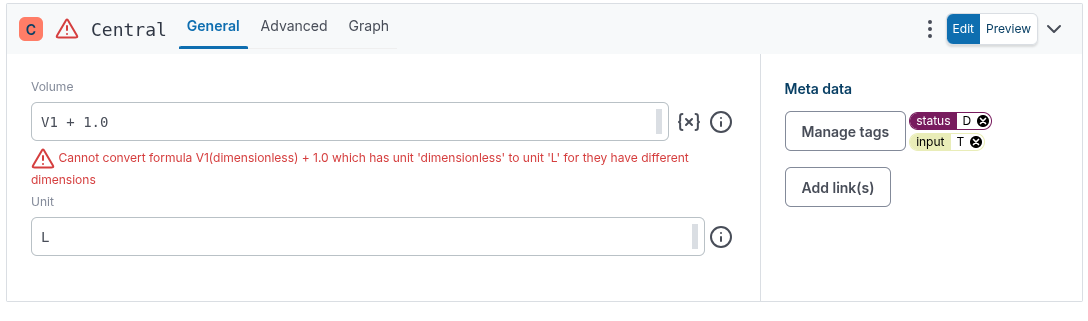
Errors related to compartment volume are now shown directly under the
volumefield in the model editor.
Trial & Protocol
- Protocols with invalid
tmaxortstepoverrides now fail sanity checks instead of causing a crash. - If all data tables have null weights and there are no active objectives in the advanced outputs, the system now shows that a fitness function cannot be computed.
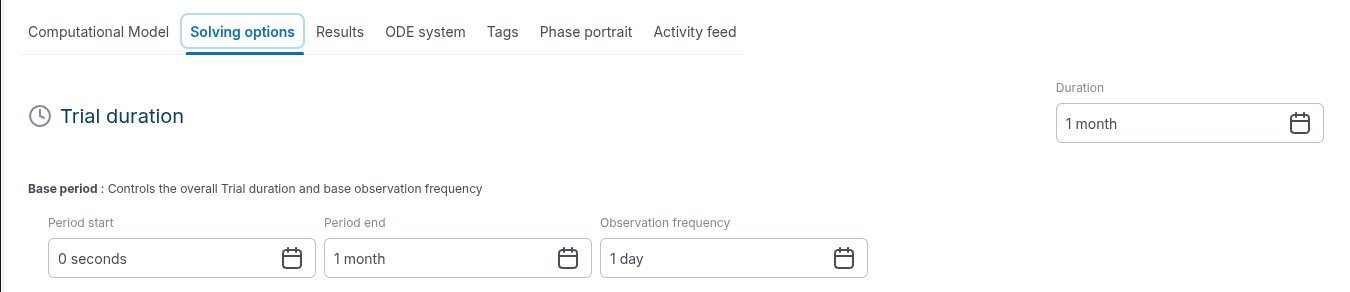
- The default trial duration has been shortened from 2 years to 1 month, and the default trial step size has been changed from 1 week to 1 day.
- Additional sanity checks now apply to protocol time overrides:
tmaxmust be greater than the base periodtmin.tstepmust be greater than(overridden_tmax - tmin)of the base period.tmaxoverrides now apply only to the base period when the new value is greater than the base periodtmax; otherwise, they apply to affected periods and discard periods that no longer fit.tstepoverrides now apply only to the base period.
Trial Viz
- The timeseries visualization now includes a “Number of time points in timeseries” option in the right panel. It defaults to 100, is capped at 1000, and is saved with the view.


-
Solver handling for infinite values in root conditions is more robust, which should allow more models to run successfully.
-
The bound scaling descriptor modal no longer duplicates
obsIdvalues when the same observation is defined on multiple protocol arms.
Calibration
-
Solver handling for infinite values in root conditions is more robust, which should allow more models to run successfully.
-
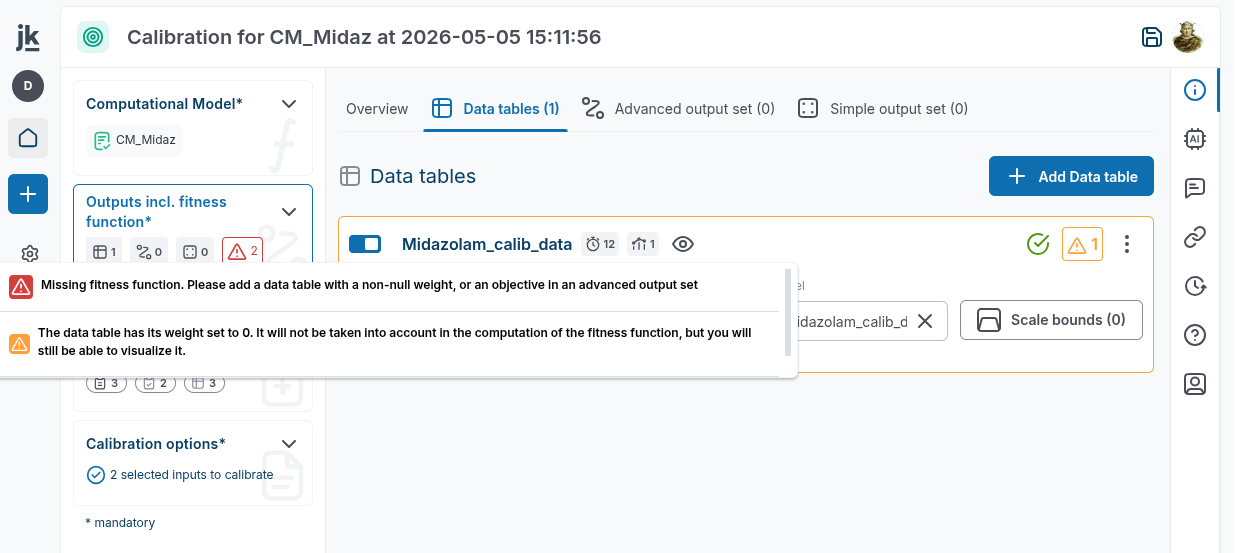
Calibration now shows an error when all data tables have null weights.
-
Calibration now requires at least one data table with a non-null weight or an active objective.
- Observations outside the simulation range are now ignored with a warning instead of causing a scoring evaluation error.
Datatable
- The bound scaling descriptor modal no longer duplicates
obsIdvalues when the same observation is defined on multiple protocol arms.


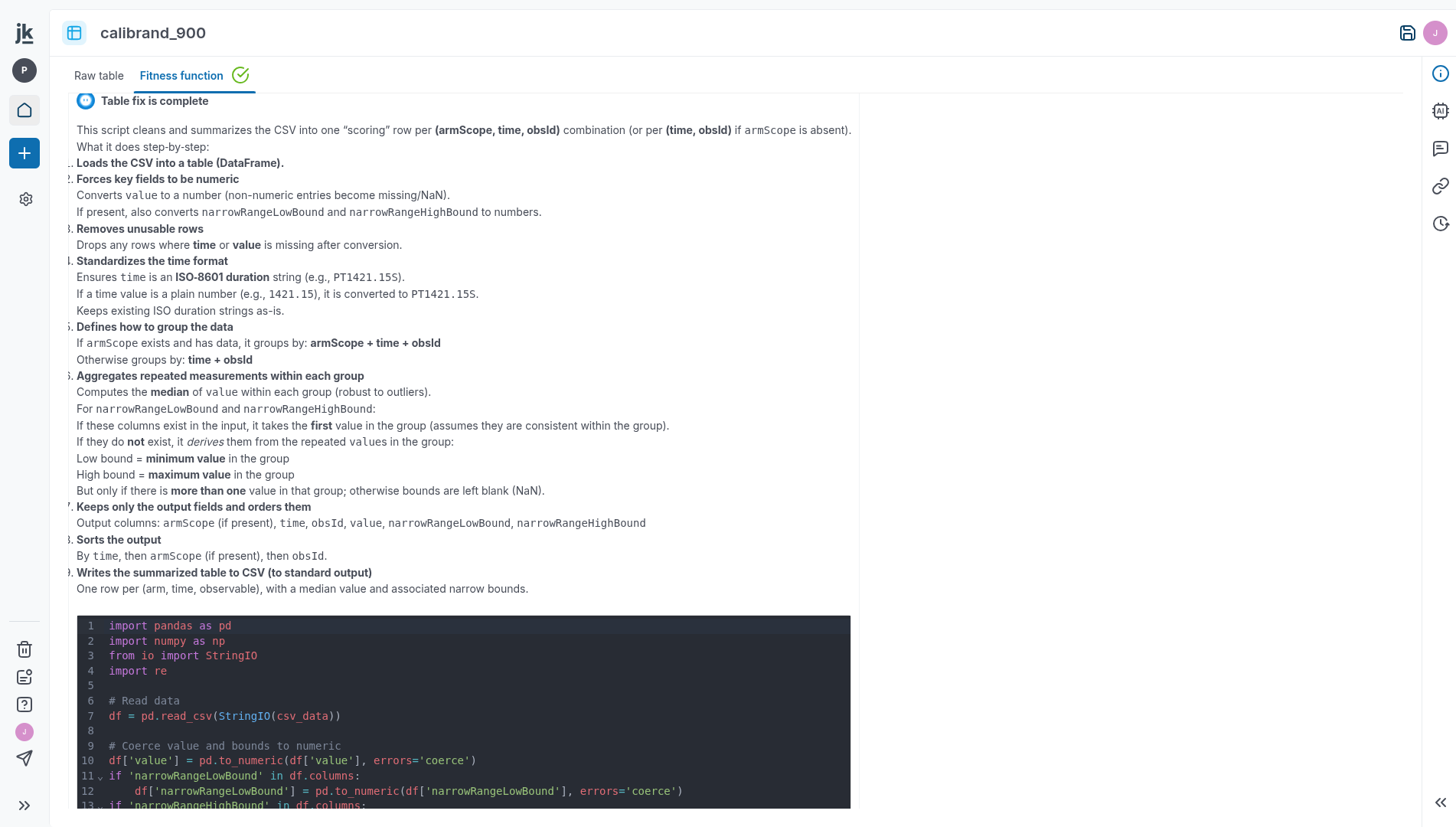
- Data table wrangling has been refactored with improved code generation and execution.
-
Data tables with null weights can now be used for visualization in calibration.
-
The data wrangling generation workflow now has more focused code generation, clearer progress updates, better retry and self-fixing behavior, and reduced data exposure in prompts.
Other
-
DDE interpolation now handles discontinuities more reliably.
-
Raw data uploads are now much faster for small files.